

Modern Trading Fundamentals From Kostolany Psychology to Jim Simons Quantitative Algorithms in 2026
MARKET INTELLIGENCE – Q1 2026
Discover how modern trading fundamentals evolved from André Kostolany’s trader psychology to Jim Simons’ Renaissance Technologies strategy—bridging human intuition with systematic trading precision for unmatched market success in 2026.
By 2026, the clash of eras defines modern trading fundamentals—where André Kostolany’s market psychology still whispers in boardrooms, while Jim Simons’ Renaissance Technologies strategy hums through servers, rewriting the rules of systematic trading transition. This is the battleground: human intuition versus cold, data-driven precision, and the winners are those who master both.
Executive Summary
- ↓ Modern Trading Fundamentals: How Kostolany’s Psychology Shapes Today’s Systematic Trading Transition
- ↓ From Intuition to Algorithms: The Renaissance Technologies Strategy Behind Jim Simons’ Success
- ↓ Systematic Trading Transition: How Modern Trading Fundamentals Merge Human Insight with Quantitative Models
- ↓ Mastering Modern Trading Fundamentals: Lessons from Kostolany’s Psychology to Jim Simons’ Algorithmic Edge
Modern Trading Fundamentals: How Kostolany’s Psychology Shapes Today’s Systematic Trading Transition
Modern Trading Fundamentals: The Evolution from Gut to Grid
André Kostolany’s legendary market psychology—where instinct, experience, and emotional discipline ruled the trading floor—once defined the essence of modern trading fundamentals. His philosophy, rooted in patience and human intuition, stood in stark contrast to the cold precision of today’s Renaissance Technologies strategy, where algorithms dissect market behavior with surgical accuracy. Yet, the systematic trading transition we’re witnessing today isn’t a rejection of Kostolany’s wisdom; it’s an evolution. The core principles of market psychology—fear, greed, and crowd behavior—remain embedded in the data, now quantified through machine learning and statistical arbitrage. The question isn’t whether human intuition or quantitative models win, but how they coexist in a landscape where both are essential.
The shift from Kostolany’s era to Jim Simons’ quantitative dominance reflects a broader transformation in how markets are understood. Where Kostolany relied on anecdotes and historical patterns, today’s hedge funds leverage terabytes of data to identify inefficiencies invisible to the naked eye. This systematic trading transition has democratized access to market insights, but it hasn’t eliminated the need for human oversight. Even the most advanced Renaissance Technologies strategy still requires traders to interpret macroeconomic narratives—like inflation trends or central bank policies—that algorithms alone can’t fully contextualize. The modern trader must now straddle two worlds: the art of reading market sentiment and the science of backtesting it.
◈ KOSTOLANY’S PSYCHOLOGY: THE HUMAN EDGE IN A DATA-DRIVEN WORLD
Kostolany’s approach was built on the belief that markets are ultimately driven by human emotions, not just fundamentals. His famous adage, “Buy when the cannons roar, sell when the violins play,” encapsulates the idea that fear and euphoria create mispricings—opportunities that even the most sophisticated algorithms can miss. While today’s quantitative funds excel at exploiting statistical anomalies, they often struggle to navigate black swan events or geopolitical shocks, where human judgment becomes invaluable. The systematic trading transition hasn’t erased the need for psychological resilience; it’s simply reframed it. Traders must now ask: *How do I quantify what I feel?* rather than relying solely on instinct.
◈ JIM SIMONS’ QUANTITATIVE REVOLUTION: WHEN DATA BECOMES THE NEW INTUITION
Jim Simons’ Renaissance Technologies strategy flipped Kostolany’s playbook on its head. Instead of relying on gut feelings, Simons’ team built models that could predict market movements with uncanny accuracy—often before traders even recognized the patterns. The Medallion Fund’s success wasn’t just about speed; it was about identifying repeatable, non-random behaviors in markets. Today, this approach has permeated every corner of trading, from high-frequency strategies to long-term macro bets. Yet, even Simons’ models require human intervention to adapt to structural shifts, like regulatory changes or technological disruptions. The systematic trading transition isn’t about replacing humans; it’s about augmenting their decision-making with data-driven precision.
Bridging the Gap: Where Psychology Meets Algorithms
The most successful traders today don’t choose between Kostolany’s psychology and Simons’ algorithms—they integrate both. For instance, understanding how institutional players execute large orders—whether through VWAP, TWAP, or iceberg strategies—can reveal hidden liquidity patterns that even the most advanced models might overlook. Similarly, macroeconomic forces like yield curve inversions or currency pair volatility demand a blend of quantitative analysis and qualitative judgment. A trader who ignores the psychological underpinnings of these movements risks being blindsided by sudden shifts in sentiment, while one who dismisses data risks missing the bigger picture.
Risk management is another area where the fusion of old and new becomes critical. Kostolany’s emphasis on capital preservation aligns perfectly with modern techniques like portfolio heat mapping and dynamic position sizing. For forex traders, this means balancing quantitative metrics—like value-at-risk (VaR) models—with qualitative assessments of geopolitical risks. A deep dive into advanced forex risk management strategies reveals that the best traders don’t just rely on stop-loss orders; they also account for behavioral biases, like overconfidence or loss aversion, that can distort even the most robust models.
◈ THE FUTURE OF TRADING: A HYBRID APPROACH
The next frontier in modern trading fundamentals lies in hybrid models that combine the best of both worlds. For example, natural language processing (NLP) algorithms can now scan earnings call transcripts or central bank statements to gauge sentiment, effectively quantifying Kostolany’s “feel” for the market. Meanwhile, machine learning models can backtest these insights against decades of historical data to validate their predictive power. The systematic trading transition isn’t about replacing human traders; it’s about giving them tools to make better decisions. The traders who thrive in this environment will be those who can speak both languages—fluently interpreting data while still trusting their instincts when the numbers don’t tell the whole story.
◈ MACROECONOMIC MODELING: WHERE QUANT MEETS QUALITATIVE INSIGHT
Macroeconomic trends—like currency pair movements or yield curve dynamics—are a perfect example of where quantitative and qualitative analysis intersect. While algorithms can identify correlations between interest rates and forex volatility, they often struggle to interpret the *why* behind these relationships. For instance, a sudden spike in the USD/JPY pair might be driven by a shift in Bank of Japan policy, but understanding whether this move is sustainable requires a nuanced grasp of global risk sentiment. Traders who explore macroeconomic modeling for forex trends will find that the most robust strategies blend statistical rigor with real-world context. The Renaissance Technologies strategy thrives in this space because it doesn’t just rely on data—it contextualizes it.
The Bottom Line: Why the Best Traders Still Need Both
The systematic trading transition has redefined what it means to be a trader, but it hasn’t rendered Kostolany’s lessons obsolete. If anything, it’s made them more valuable. The traders who will dominate the next decade are those who can harness the power of algorithms without losing sight of the human element. They’ll use data to validate their instincts, not replace them. They’ll recognize that while Renaissance Technologies strategy can predict market movements with astonishing accuracy, it’s still the trader’s job to ask: *What if the model is wrong?* In the end, the fusion of psychology and quantitative analysis isn’t just the future of trading—it’s the only way to navigate the complexities of modern markets.
From Intuition to Algorithms: The Renaissance Technologies Strategy Behind Jim Simons’ Success
THE EVOLUTION OF MODERN TRADING FUNDAMENTALS: KOSTOLANY’S PSYCHOLOGY MEETS SIMONS’ QUANTITATIVE ALGORITHMS
The transition from intuition-driven trading to systematic, data-centric strategies marks one of the most profound shifts in financial markets. André Kostolany, the legendary speculator, built his fortune on market psychology, gut instinct, and an almost philosophical understanding of investor behavior. His approach was rooted in the belief that markets are driven by human emotions—fear, greed, and herd mentality—rather than pure fundamentals. Yet, as markets grew more complex and data became abundant, a new paradigm emerged: the Renaissance Technologies strategy, pioneered by Jim Simons. This shift didn’t discard Kostolany’s insights but rather quantified them, transforming subjective intuition into repeatable, algorithmic precision. The result? A systematic trading transition that redefined what it means to extract alpha in modern markets.
Simons’ success wasn’t just about replacing human judgment with machines—it was about bridging the gap between the two. While Kostolany relied on experience and pattern recognition, Renaissance Technologies leveraged statistical models to detect those same patterns at scale. The firm’s edge lay in its ability to process vast datasets, identifying inefficiencies that even the most seasoned traders might overlook. This modern trading fundamental—the fusion of behavioral finance with quantitative rigor—has become the gold standard for hedge funds today. But how exactly did Simons achieve this? The answer lies in three core pillars: data, discipline, and diversification.
THE THREE PILLARS OF THE RENAISSANCE TECHNOLOGIES STRATEGY
◈ DATA: THE FOUNDATION OF SYSTEMATIC TRADING
Kostolany’s approach was inherently qualitative—he read newspapers, observed crowd behavior, and trusted his instincts. Simons, however, built Renaissance Technologies on a foundation of hard data. The firm’s models ingested everything from price movements to weather patterns, searching for statistical edges that could be exploited systematically. This wasn’t just about crunching numbers; it was about decoding market psychology through data. By quantifying what Kostolany understood intuitively, Simons’ team could trade with a level of consistency that discretionary traders could only dream of. The key? Avoiding the pitfalls of overfitting models to historical noise, a common trap in algorithmic trading that can lead to catastrophic losses when market regimes shift.
◈ DISCIPLINE: ELIMINATING EMOTIONAL BIASES
One of Kostolany’s most famous adages was, “The stock market is driven by two emotions: fear and greed.” He was right—but where he saw an unavoidable reality, Simons saw an opportunity for systematic exploitation. By removing human emotion from the equation, Renaissance Technologies could execute trades with machine-like precision. This discipline extended beyond execution; it was embedded in the firm’s risk management framework. Tools like Value at Risk (VaR) and Monte Carlo simulations allowed the fund to quantify risk tolerance in ways that traditional traders couldn’t, ensuring that no single position could derail the portfolio. This wasn’t just about avoiding losses—it was about engineering resilience into the trading process itself.
◈ DIVERSIFICATION: THE ALL-WEATHER PORTFOLIO
Kostolany often concentrated his bets, riding his convictions to massive gains (or occasional losses). Simons, however, understood that true edge came from diversification across uncorrelated strategies. The Renaissance Technologies strategy wasn’t just about equities or bonds—it was about building an all-weather portfolio that could thrive in any market environment. By combining equities, fixed income, commodities, and even esoteric assets, the fund could mitigate drawdowns while capturing alpha from multiple sources. This approach wasn’t just about spreading risk—it was about engineering a portfolio that was greater than the sum of its parts. In an era where macroeconomic uncertainty dominates headlines, this principle has never been more relevant.
WHY THE SYSTEMATIC TRADING TRANSITION IS HERE TO STAY
The debate between intuition and algorithms isn’t about which approach is superior—it’s about how they complement each other. Kostolany’s psychological insights remain invaluable, but in today’s data-saturated markets, they’re no longer enough. The Renaissance Technologies strategy proves that the future of trading lies in systematic, repeatable processes that can adapt to ever-changing conditions. This isn’t just a shift in methodology; it’s a fundamental evolution in how we understand and interact with markets.
For traders and investors, the lesson is clear: modern trading fundamentals demand a balance between human insight and machine precision. Whether you’re a discretionary trader or a quant, the principles of data-driven decision-making, disciplined risk management, and diversified exposure are non-negotiable. The systematic trading transition isn’t just a trend—it’s the new standard. And those who fail to adapt risk being left behind.
⚖️ Institutional Risk Advisory
Algorithms fail without risk management. Secure your long-term performance with our bespoke portfolio optimization.
Systematic Trading Transition: How Modern Trading Fundamentals Merge Human Insight with Quantitative Models
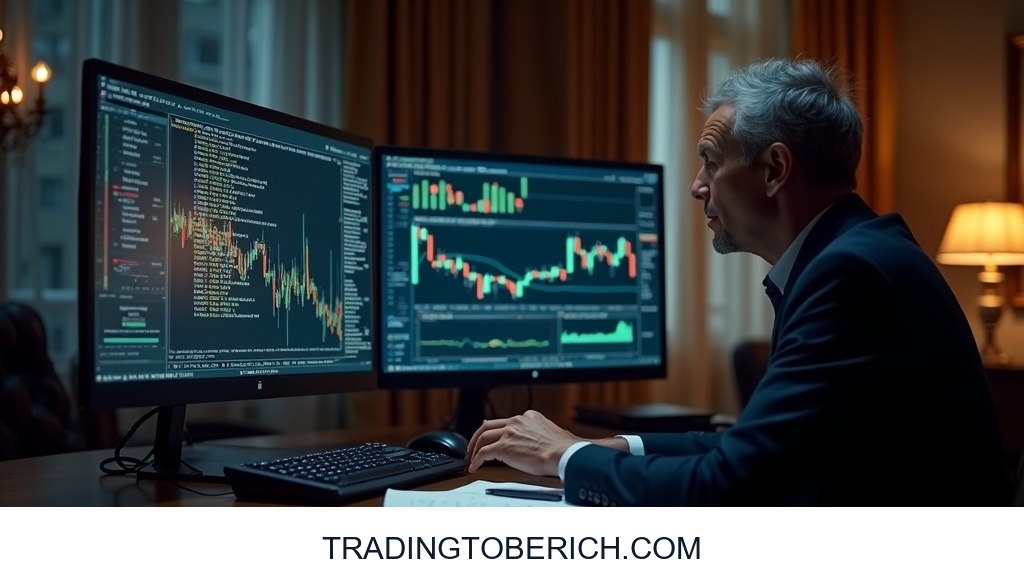
The Evolution of Modern Trading Fundamentals: From Gut to Grid
André Kostolany’s legendary market psychology—where instinct, experience, and emotional discipline ruled the trading floor—once defined the essence of modern trading fundamentals. But today, the landscape has shifted. The rise of systematic trading transition has redefined how institutions interpret risk, opportunity, and market behavior. No longer is trading purely about reading the tape or sensing fear in a crowded room. Now, it’s about reading the code—where Renaissance Technologies strategy and its peers have turned data into the new oracle, blending human insight with machine precision in ways Kostolany could never have imagined.
Yet, the transition isn’t about replacing intuition—it’s about refining it. The most successful funds today don’t choose between psychology and algorithms. They merge them. Kostolany’s emphasis on patience and market timing finds new life in quantitative models that detect subtle shifts in volatility, liquidity, and sentiment before they become obvious. Meanwhile, Jim Simons’ quantitative algorithms don’t just crunch numbers—they interpret them through a lens of behavioral patterns, turning raw data into actionable signals. This fusion is the heart of the systematic trading transition, where the art of trading meets the science of prediction.
How Human Insight Anchors Quantitative Models
◈ THE PSYCHOLOGY OF DATA INTERPRETATION
Even in a world dominated by Jim Simons’ quantitative algorithms, human judgment remains irreplaceable. Algorithms excel at processing vast datasets, but they lack the contextual awareness to distinguish between a statistical anomaly and a genuine regime shift. For instance, a sudden spike in volatility might trigger a sell signal in a momentum model—but a seasoned trader, grounded in modern trading fundamentals, recognizes whether it’s a temporary liquidity squeeze or the start of a structural breakdown. This is where the systematic trading transition shines: it doesn’t eliminate human oversight; it elevates it to a higher plane of strategic decision-making.
◈ THE ROLE OF NARRATIVE IN QUANTITATIVE FRAMEWORKS
Markets are stories, and stories move prices. While Renaissance Technologies strategy thrives on statistical edges, it still relies on human analysts to frame the macro narrative. Is inflation transitory or entrenched? Is a central bank pivot imminent or delayed? These questions shape the parameters of quantitative models, determining which datasets are weighted more heavily. For example, when trading the GBP/JPY cross, volatility modeling must account for interest rate differentials—but the *interpretation* of those differentials depends on whether traders believe the Bank of England will hike or hold. This interplay between narrative and numbers is the soul of the systematic trading transition.
Where Quantitative Models Outperform Human Instinct
◈ SPEED AND SCALE: THE ALGORITHMIC ADVANTAGE
No human can process terabytes of market data in milliseconds. This is where Jim Simons’ quantitative algorithms leave traditional traders in the dust. High-frequency strategies exploit microsecond advantages in liquidity, order flow, and arbitrage opportunities that are invisible to the naked eye. For example, a model might detect a fleeting correlation between crude oil prices and forex pairs—like the CAD/JPY trading dynamic—and execute trades before human traders even register the pattern. In this domain, the systematic trading transition isn’t just an evolution; it’s a revolution in execution.
◈ ELIMINATING EMOTIONAL BIAS
Kostolany’s greatest lesson was the danger of emotional trading—fear, greed, and overconfidence. Quantitative models eliminate these biases by design. A Renaissance Technologies strategy doesn’t second-guess itself; it follows the rules, even when the market screams otherwise. For instance, during a sudden drawdown, a human trader might panic and liquidate positions, while a systematic model adheres to its risk parameters, often reaping rewards when the market reverses. This discipline is a cornerstone of modern trading fundamentals, proving that sometimes, the best psychology is no psychology at all.
The Future: Hybrid Models and the Next Frontier
The future of trading lies in hybrid models—where systematic trading transition doesn’t mean abandoning human insight but augmenting it. Machine learning models are now being trained to recognize not just patterns in price data, but patterns in *how humans react* to those patterns. For example, a model might detect that after three consecutive Fed rate hikes, retail traders tend to overreact to inflation data, creating a predictable short-term mispricing. This is where the legacy of Kostolany and Simons converges: the former taught us to *feel* the market, while the latter taught us to *measure* it. The next generation of funds will do both.
◈ QUANTITATIVE FUNDAMENTAL ANALYSIS: THE NEW FRONTIER
Even fundamental analysis is undergoing a systematic trading transition. Gone are the days of manually poring over balance sheets. Today, funds use quantitative fundamental analysis to scan thousands of companies for earnings quality, cash flow stability, and valuation anomalies—all in real time. DCF models, once the domain of spreadsheet-wielding analysts, are now automated, dynamic, and integrated into broader trading systems. This doesn’t replace fundamental insight; it supercharges it, allowing traders to focus on the *why* behind the numbers rather than the grunt work of crunching them.
The systematic trading transition isn’t a rejection of the past—it’s an evolution. Kostolany’s psychology and Simons’ algorithms aren’t opposing forces; they’re complementary tools in the modern trader’s arsenal. The funds that thrive in the next decade will be those that master this fusion, where data-driven precision meets human intuition, and where the art of trading is finally matched by the science of winning.
Mastering Modern Trading Fundamentals: Lessons from Kostolany’s Psychology to Jim Simons’ Algorithmic Edge
The Evolution of Modern Trading Fundamentals: Bridging Psychology and Algorithms
The journey from Kostolany’s market psychology to Jim Simons’ quantitative algorithms represents one of the most profound systematic trading transitions in financial history. André Kostolany, the legendary speculator, built his fortune on intuition, patience, and an almost artistic understanding of crowd behavior. His philosophy—rooted in the belief that markets are driven by human emotion—remains a cornerstone of modern trading fundamentals. Yet, as markets grew more complex, so did the tools needed to navigate them. Enter Renaissance Technologies, where Simons and his team pioneered a data-driven approach that stripped away emotional bias, replacing gut instinct with cold, hard mathematics. This shift didn’t just redefine trading; it redefined what it means to master the markets.
Today, the most successful traders don’t choose between psychology and algorithms—they integrate both. Kostolany’s lessons on market sentiment still hold weight, but they’re now augmented by the precision of Renaissance Technologies strategy. The question isn’t whether to trust your instincts or the data; it’s about knowing when to lean on each. For instance, while a seasoned trader might sense a market top forming, a quantitative model can confirm it with statistical rigor. This hybrid approach is where modern trading fundamentals truly shine, blending the art of intuition with the science of systematic execution.
Kostolany’s Psychology: The Human Element in a Data-Driven World
◈ THE POWER OF PATIENCE AND CONTRARIAN THINKING
Kostolany’s most enduring lesson is that markets are cyclical, and the crowd is often wrong. His famous adage, “Buy when there’s blood in the streets,” encapsulates the contrarian mindset that still separates great traders from the rest. In an era dominated by high-frequency trading and quantitative algorithms, this psychological edge remains invaluable. While algorithms excel at processing vast datasets, they struggle to interpret the irrational exuberance or panic that drives market extremes. That’s where human intuition—honed by experience—steps in. The key is recognizing when sentiment has swung too far, creating opportunities that even the most sophisticated models might overlook.
◈ EMOTIONAL DISCIPLINE IN AN ALGORITHMIC AGE
Even in a world where Renaissance Technologies strategy dominates, emotional discipline remains a trader’s most powerful tool. Kostolany’s insistence on sticking to a plan—regardless of short-term noise—is a principle that transcends time. The challenge today is that the noise has amplified. Social media, 24/7 news cycles, and algorithmic trading can create feedback loops that distort reality. This is where systematic risk management frameworks become essential. By pre-defining entry and exit points, traders can mitigate the impact of cognitive biases like overconfidence or loss aversion. The best strategies, whether discretionary or quantitative, are those that account for human fallibility while leveraging data to stay objective.
Jim Simons’ Algorithmic Edge: The Rise of Systematic Trading
◈ FROM INTUITION TO INFORMATION: THE DATA REVOLUTION
Jim Simons didn’t just embrace data—he weaponized it. Renaissance Technologies’ Medallion Fund, one of the most successful hedge funds in history, relies on quantitative algorithms that scour vast datasets for patterns invisible to the human eye. This systematic trading transition wasn’t about replacing human traders; it was about augmenting their capabilities. Where Kostolany relied on his gut, Simons’ team built models that could process millions of data points in seconds. The result? A trading strategy that thrives on statistical edges, not emotional impulses. Today, this approach has become the gold standard for modern trading fundamentals, proving that in markets, information is the ultimate currency.
◈ THE ROLE OF ALTERNATIVE DATA IN QUANT TRADING
The secret sauce behind Renaissance Technologies strategy isn’t just raw computing power—it’s the ability to extract signals from noise. Traditional market data (prices, volumes) is just the starting point. The real edge comes from alternative data sources like satellite imagery, credit card transactions, and social media sentiment. These unconventional inputs allow quants to anticipate market moves before they happen. For example, tracking foot traffic at retail stores can provide early insights into consumer spending trends, giving traders a head start on macroeconomic shifts. In a world where everyone has access to the same price data, alternative data is the new frontier for gaining an edge.
The Hybrid Approach: Where Psychology Meets Algorithms
The most sophisticated traders today don’t see Kostolany’s psychology and Jim Simons’ quantitative algorithms as opposing forces—they see them as complementary tools. A purely discretionary trader might miss the subtle patterns that a quantitative model detects, while a purely algorithmic strategy might fail to account for the irrational behavior that drives market bubbles or crashes. The sweet spot lies in combining the two. For instance, a trader might use sentiment analysis to gauge market mood, then deploy a quantitative model to execute trades with precision. This hybrid approach is the future of modern trading fundamentals, where human intuition and machine intelligence work in tandem.
◈ DELTA-NEUTRAL HEDGING: THE QUANTITATIVE ANSWER TO MARKET VOLATILITY
One of the most powerful tools in the systematic trading transition is the concept of delta-neutral hedging. This strategy, rooted in options trading, allows traders to profit from volatility without taking directional bets. By balancing long and short positions, a delta-neutral portfolio remains insulated from small market moves, letting traders focus on the bigger picture. For those looking to dive deeper, understanding how the Greeks (delta, gamma, theta) interact in a hedging strategy is essential. It’s a perfect example of how quantitative techniques can turn market uncertainty into an advantage—something Kostolany would have appreciated, even if he relied on a different playbook.
◈ THE FUTURE OF TRADING: AI, MACHINE LEARNING, AND BEYOND
The next frontier in modern trading fundamentals is the integration of artificial intelligence and machine learning. While Renaissance Technologies strategy already leverages advanced statistical models, the future lies in AI’s ability to adapt and learn in real time. Imagine a trading system that not only identifies patterns but also evolves as market dynamics shift. This isn’t science fiction—it’s already happening. The challenge, however, is ensuring that these systems don’t become black boxes. Transparency and interpretability remain critical, especially when blending quantitative models with human oversight. After all, even the most advanced algorithms can’t replace the nuanced judgment that comes from years of trading experience.
Key Takeaways: Mastering the Best of Both Worlds
The systematic trading transition from Kostolany to Simons isn’t about choosing between psychology and algorithms—it’s about mastering both. Here’s how traders can apply these modern trading fundamentals to their own strategies:
◈ DEVELOP A HYBRID MINDSET
Use quantitative tools to identify opportunities, but don’t ignore the qualitative signals that only human intuition can provide. For example, a model might flag an undervalued stock, but a trader’s experience could reveal why the market is mispricing it. This dual approach ensures that you’re not just following the data—you’re interpreting it with context.
◈ LEVERAGE ALTERNATIVE DATA FOR EDGE
Incorporate non-traditional data sources into your analysis to stay ahead of the curve. Whether it’s satellite imagery tracking commodity inventories or NLP analyzing earnings call transcripts, alternative data can provide insights that traditional metrics miss. The key is to focus on data that’s both relevant and actionable.
◈ MASTER RISK MANAGEMENT LIKE A QUANT
Quantitative funds like Renaissance Technologies don’t just focus on returns—they obsess over risk. Adopt a systematic approach to risk management by setting strict stop-loss rules, diversifying across uncorrelated strategies, and using tools like delta-neutral hedging to protect your portfolio. Remember, the goal isn’t to avoid risk entirely; it’s to manage it in a way that maximizes your edge.
The systematic trading transition from Kostolany to Simons is a testament to the evolution of markets. While the tools have changed, the core principles of trading—discipline, patience, and adaptability—remain timeless. By blending the psychological insights of the past with the quantitative rigor of the present, traders can navigate even the most complex markets with confidence. The future belongs to those who can master both.
Conclusion
The evolution from Kostolany’s market psychology to Jim Simons’ quantitative algorithms and the Renaissance Technologies strategy marks the defining shift in modern trading fundamentals. Where intuition once ruled, data now dominates—yet the core challenge remains: interpreting macro signals through the right lens. The systematic trading transition isn’t about replacing human judgment but augmenting it with unemotional, scalable precision.
For hedge funds today, the edge lies in bridging these worlds—leveraging quantitative algorithms to decode patterns while staying anchored to real-world macro dynamics. The future belongs to those who master this hybrid playbook: ruthless data discipline, tempered by the wisdom of market psychology’s past.
Frequently Asked Questions
How Do Modern Trading Fundamentals Bridge Kostolany’s Psychology and Jim Simons’ Quantitative Algorithms?
Modern trading fundamentals have evolved dramatically, seamlessly integrating the time-tested market psychology principles of André Kostolany with the cutting-edge quantitative algorithms pioneered by Jim Simons and his Renaissance Technologies strategy. Kostolany’s philosophy emphasized the emotional and psychological underpinnings of markets—fear, greed, and mass sentiment—while Simons’ approach revolutionized trading by leveraging data-driven, systematic models. The systematic trading transition from intuition-based decisions to algorithmic precision represents a paradigm shift in how hedge funds operate today. By combining Kostolany’s deep understanding of human behavior with Simons’ mathematical rigor, modern traders can navigate markets with both intuition and empirical evidence, creating a hybrid framework that is both adaptive and disciplined.
What Defines the Renaissance Technologies Strategy in Today’s Quantitative Trading Landscape?
The Renaissance Technologies strategy remains one of the most influential blueprints in modern quantitative trading, setting the gold standard for how hedge funds approach data-driven investing. At its core, this strategy relies on advanced statistical models, machine learning, and pattern recognition to identify inefficiencies in markets that traditional traders might overlook. Unlike Kostolany’s psychology-driven approach, which thrives on narrative and sentiment, the Renaissance Technologies strategy is rooted in cold, hard data—processing vast datasets to uncover hidden correlations and predictive signals. The systematic trading transition from discretionary to algorithmic trading was accelerated by Simons’ work, proving that markets, while influenced by human emotion, can also be decoded through mathematical precision. Today, this strategy continues to shape how hedge funds integrate modern trading fundamentals, blending Kostolany’s psychological insights with Simons’ quantitative algorithms to create a robust, adaptive trading framework.
Why Is the Systematic Trading Transition Critical for Modern Hedge Funds?
The systematic trading transition represents a fundamental evolution in how hedge funds operate, marking a shift from reliance on human intuition to the dominance of algorithmic decision-making. This transition is critical because it addresses the limitations of traditional trading methods, which are often swayed by cognitive biases and emotional reactions—elements Kostolany himself warned about. By adopting modern trading fundamentals, funds can leverage the best of both worlds: the psychological acumen of Kostolany’s era and the computational power of Jim Simons’ quantitative algorithms. The Renaissance Technologies strategy exemplifies this transition, demonstrating how systematic models can process vast amounts of data in real-time, reducing latency and improving accuracy. For modern hedge funds, embracing this transition is not just a competitive advantage—it’s a necessity to stay relevant in an increasingly complex and data-saturated financial landscape.
📂 Associated Market Intelligence
- ◈How to trade Bitcoin using CME futures and institutional order flow
- ◈Dollar Cost Averaging (DCA): A quantitative analysis of drawdown reduction
- ◈DeFi Regulation 2026: MiCA, SEC enforcement, and institutional compliance
- ◈Trading the GBP/JPY cross: Volatility modeling and interest rate differentials
- ◈Macroeconomic modeling for forex currency pair trends and yield curves
- ◈Algorithmic trading architecture: Mean reversion and trend-following systems
- ◈Overcoming cognitive biases in trading through systematic risk management
- ◈Quantifying risk tolerance: Value at Risk (VaR) and Monte Carlo simulations
- ◈High-Frequency Trading (HFT) and order book scalping strategies
- ◈CAD/JPY trading strategy: Correlating crude oil prices with forex pairs
- ◈Edward Thorp and the Kelly Criterion: The mathematics of optimal position sizing
- ◈Quantitative fundamental analysis: DCF models and earnings quality
- ◈Modern Portfolio Theory (MPT) and the Efficient Frontier for long-term growth
- ◈Building an all-weather diversified portfolio: Equities, bonds, and alternatives
- ◈Statistical arbitrage: Ed Thorp’s market-neutral strategies and pairs trading
- ◈Advanced forex risk management: Position sizing and portfolio heat
- ◈Options Greeks explained: How to build a delta-neutral hedging portfolio
- ◈Institutional order execution: Understanding VWAP, TWAP, and Iceberg orders
- ◈Algorithmic trading pitfalls: Survivorship bias and curve overfitting
- ◈Alternative data in quant trading: NLP, sentiment analysis, and machine learning
⚖️ REGULATORY DISCLOSURE & RISK WARNING
The trading strategies and financial insights shared here are for educational and analytical purposes only. Trading involves significant risk of loss and is not suitable for all investors. Past performance is not indicative of future results.