

How to Invest in Lithium and EV Battery Metal Commodities for the Green Energy Transition
MARKET INTELLIGENCE – Q1 2026
Capitalize on the surging demand for lithium and rare earth elements as the world accelerates toward a sustainable future. Discover expert strategies to invest in EV battery metals and secure your position in the green energy revolution.
The green energy transition is accelerating—yet lithium and rare earth elements face brutal physical bottlenecks as Tesla and BYD scale production at breakneck speed. If you want to capitalize on this supply-demand imbalance, learning how to invest in lithium and EV battery metal commodities isn’t just smart—it’s survival. The window to act is now, before the market prices in the coming shortage.
Executive Summary
- ↓ Why Lithium and EV Battery Metals Are Key to the Green Energy Transition
- ↓ How to Invest in Lithium Commodities: Strategies for Beginners and Experts
- ↓ Rare Earth Elements and EV Battery Metals: Diversifying Your Portfolio
- ↓ Future Trends: How the Green Energy Transition Will Shape Lithium and EV Investments
Why Lithium and EV Battery Metals Are Key to the Green Energy Transition
Why Lithium and EV Battery Metals Are the Backbone of the Green Energy Transition
The green energy transition is not just a trend—it’s an industrial revolution. At its core, this shift relies on one critical factor: the availability of rare earth elements and battery metals, particularly lithium. Without these resources, the dream of a decarbonized future stalls. Tesla and BYD, the titans of electric vehicle (EV) production, are scaling at an unprecedented pace, but their growth is colliding with the harsh realities of lithium extraction. The physical limitations of mining and refining these metals are becoming a bottleneck, threatening to derail the entire green energy transition.
Unlike commodities such as gold or corn, lithium doesn’t follow traditional supply-demand curves. Its extraction is constrained by geological scarcity, environmental regulations, and the sheer time it takes to bring new mines online. While demand for EVs is surging—with Tesla and BYD alone targeting millions of units annually—the supply of lithium is struggling to keep up. This mismatch isn’t just a short-term hiccup; it’s a structural challenge that could define the next decade of how to invest in lithium and EV battery metal commodities.
◈ The Exponential Demand from Tesla and BYD
Tesla’s Gigafactories and BYD’s vertical integration are pushing lithium demand to stratospheric levels. These companies aren’t just building cars—they’re constructing entire ecosystems around battery production. A single Tesla Model 3 requires roughly 8 kilograms of lithium, and with both companies ramping up production, the math is simple: more EVs mean more lithium. The problem? Lithium supply isn’t scaling at the same pace. New mines take 5-10 years to develop, and even then, they face environmental and political hurdles. This isn’t a temporary shortage; it’s a fundamental imbalance that could persist for years.
◈ The Physical Limits of Lithium Extraction
Lithium isn’t like oil or corn, where production can be dialed up with capital investment. It’s a finite resource locked in hard-to-reach deposits, often in politically unstable regions. The two primary sources—brine evaporation (used in South America) and hard-rock mining (dominant in Australia)—each come with their own challenges. Brine operations are slow, taking 12-18 months to produce lithium carbonate, while hard-rock mining is energy-intensive and environmentally contentious. Even with technological advancements, the industry can’t escape the fact that lithium is a rare earth element with inherently limited supply.
How to Invest in Lithium and EV Battery Metals: The Strategic Playbook
For investors, the lithium supply crunch presents a unique opportunity. Unlike trading XAU/USD during periods of economic uncertainty, where macroeconomic forces dominate, lithium’s value is tied to a structural shift in global energy. The key is to focus on companies with direct exposure to lithium production, refining, and battery technology. But be warned: this isn’t a market for the faint of heart. Volatility is high, and the risks—geopolitical, environmental, and technological—are significant.
One way to gain exposure is through lithium-focused ETFs, which offer diversified access to the sector without the single-stock risk. Alternatively, investors can look at junior mining companies with promising lithium projects, though this requires deep due diligence. For those who prefer a more hands-off approach, futures contracts on lithium or related battery metals can provide leverage to the upside—though they come with their own set of complexities, much like developing a soybean trading strategy using WASDE reports, where timing and market sentiment play crucial roles.
◈ Beyond Lithium: The Rise of Alternative Battery Metals
While lithium dominates the conversation, the green energy transition is also driving demand for other critical metals. Cobalt, nickel, and graphite are essential components of EV batteries, and their supply chains are equally strained. Cobalt, in particular, is a geopolitical hotspot, with over 70% of global production coming from the Democratic Republic of Congo, a region plagued by instability. Nickel, meanwhile, is facing its own supply constraints, with Indonesia’s export bans reshaping the market. For investors, this means diversification is key. A well-rounded portfolio should include exposure to multiple rare earth elements to mitigate risk.
◈ The Role of Recycling in the Lithium Supply Chain
As the world grapples with lithium shortages, recycling is emerging as a critical solution. Companies like Redwood Materials and Li-Cycle are pioneering battery recycling technologies that could recover up to 95% of lithium, cobalt, and nickel from spent EV batteries. This isn’t just an environmental win—it’s a strategic imperative. With the first generation of EVs now reaching the end of their lifespan, the recycling industry is poised for explosive growth. For investors, this presents a unique opportunity to capitalize on the circular economy while supporting the green energy transition.
The Broader Implications for Commodities Markets
The lithium crunch isn’t happening in a vacuum. It’s part of a broader shift in commodities markets, where traditional staples like oil and corn are being redefined by the green energy transition. Just as ethanol production demand is reshaping corn futures, the rise of EVs is transforming the lithium market. Investors who understand these interconnections will be better positioned to navigate the volatility ahead.
The bottom line? The green energy transition is here to stay, and lithium is its lifeblood. For those looking to capitalize on this megatrend, the time to act is now. Whether through direct investments in lithium producers, ETFs, or recycling ventures, the opportunities are vast—but so are the risks. As with any commodity play, success hinges on understanding the underlying fundamentals, staying ahead of geopolitical shifts, and maintaining a long-term perspective.
↔ Swipe to view
| METRIC / SCENARIO | LITHIUM DEMAND (2026) | SUPPLY CONSTRAINTS |
|---|---|---|
| Tesla & BYD Annual EV Production | ~5 million units (combined) | Lithium supply growth lagging behind demand |
| Lithium Extraction Methods | Brine (70%), Hard-Rock (30%) | Brine: 12-18 months to produce; Hard-Rock: High energy costs |
| Recycling Potential | ~10-15% of supply by 2030 | Limited by battery collection infrastructure |
How to Invest in Lithium Commodities: Strategies for Beginners and Experts
How to Invest in Lithium: The Green Energy Transition’s Most Critical Metal
The green energy transition is accelerating at an unprecedented pace, and lithium sits at the heart of this revolution. As electric vehicles (EVs) dominate automotive production—spearheaded by giants like Tesla and BYD—demand for lithium-ion batteries is growing exponentially. Yet, the physical limitations of lithium extraction present a stark reality: supply cannot scale as quickly as demand. This imbalance creates a compelling case for investors exploring how to invest in lithium and EV battery metal commodities, but it also demands a strategic approach to navigate volatility and long-term scarcity.
Unlike traditional commodities, lithium is not traded on major futures exchanges like oil or gold. Instead, investors must access the market through alternative vehicles, each with unique risk-reward profiles. Understanding these pathways is essential for both beginners and seasoned traders looking to capitalize on the rare earth elements driving the next industrial wave. Below, we break down the most effective strategies to gain exposure while mitigating the physical and geopolitical constraints of the lithium supply chain.
Direct and Indirect Ways to Invest in Lithium Commodities
◈ Lithium Mining Stocks: High-Risk, High-Reward Exposure
Investing in lithium producers offers the most direct exposure to the metal’s price movements. Companies like Albemarle, SQM, and Ganfeng Lithium dominate global production, but their stock performance is tied to operational efficiency, geopolitical risks, and lithium carbonate prices. These stocks can outperform during supply shortages but may underperform if extraction costs rise or demand softens. For those willing to tolerate volatility, mining equities are a cornerstone of any lithium and EV battery metal commodities portfolio.
◈ Lithium ETFs: Diversified Exposure Without Single-Stock Risk
For investors seeking broader exposure, lithium-focused ETFs like the Global X Lithium & Battery Tech ETF (LIT) or the Amplify Lithium & Battery Technology ETF (BATT) provide diversified access to miners, battery manufacturers, and ancillary players. These funds spread risk across the entire green energy transition supply chain, from raw material extraction to battery production. While ETFs dilute single-stock volatility, they also limit upside potential during lithium price surges.
◈ Lithium Futures and OTC Contracts: For Sophisticated Traders Only
Lithium futures are not yet standardized on major exchanges, but over-the-counter (OTC) contracts and lithium carbonate swaps are available through specialized brokers. These instruments allow institutional investors to hedge or speculate on lithium prices, but they come with significant counterparty risk and liquidity constraints. Unlike agricultural commodities like frozen concentrated orange juice, lithium’s illiquid market makes futures trading a niche strategy reserved for experts.
◈ Battery Manufacturers and EV Producers: Indirect Lithium Exposure
Investing in battery manufacturers (e.g., Panasonic, CATL) or EV producers (e.g., Tesla, BYD) provides indirect exposure to lithium demand. These companies are vertically integrated, controlling everything from raw material procurement to final product assembly. While their stock performance is influenced by broader market trends, their reliance on lithium makes them a proxy for the metal’s long-term trajectory. However, investors must account for competitive dynamics and technological disruptions in the rare earth elements space.
Key Risks in Lithium Investing: Physical and Market Constraints
The lithium market is uniquely vulnerable to supply chain bottlenecks. Unlike precious metals tied to catalytic converters, lithium extraction is geographically concentrated in Australia, Chile, and Argentina, where water scarcity, regulatory hurdles, and geopolitical tensions can disrupt production. Tesla and BYD’s aggressive expansion plans further strain supply, as new lithium projects take 5–10 years to reach full capacity. This lag creates a structural deficit that could persist for decades, but it also introduces volatility for investors.
◈ Geopolitical and Regulatory Risks
Lithium-rich nations are increasingly asserting control over their resources. Chile’s nationalization efforts and Argentina’s export restrictions highlight the risks of resource nationalism. Investors must monitor policy shifts in key producing regions, as sudden regulatory changes can upend supply forecasts. Diversifying across jurisdictions or investing in companies with global operations can mitigate this risk.
◈ Technological Disruption and Substitution Risks
While lithium-ion batteries dominate today, alternative technologies like sodium-ion or solid-state batteries could reduce lithium demand. Companies like CATL are already commercializing sodium-ion batteries, which use cheaper, more abundant materials. Investors must stay ahead of technological trends to avoid being caught in a declining industry. A balanced portfolio should include exposure to both lithium and emerging battery chemistries.
◈ Environmental and Social Governance (ESG) Pressures
Lithium extraction is water-intensive and can harm local ecosystems. Environmental groups and indigenous communities are increasingly opposing new projects, delaying permits and increasing costs. Companies with strong ESG practices may command premium valuations, while those with poor sustainability records face reputational and financial risks. Investors should prioritize firms with transparent supply chains and ethical sourcing policies.
Long-Term Outlook: Why Lithium Remains a Strategic Investment
Despite short-term volatility, lithium’s role in the green energy transition ensures its long-term relevance. Governments worldwide are mandating EV adoption, with the EU banning internal combustion engine sales by 2035 and the U.S. offering subsidies for battery production. These policies create a structural tailwind for lithium demand, but investors must remain vigilant. The interplay between supply constraints, technological advancements, and macroeconomic factors—such as how commodity supercycles influence inflation and interest rates—will dictate lithium’s trajectory in the coming decades.
For beginners, starting with lithium ETFs or blue-chip mining stocks offers a balanced entry point. Experienced investors may explore OTC contracts or venture into early-stage lithium exploration companies, where the risk-reward profile is steeper. Regardless of the approach, the key to success lies in understanding the physical limitations of lithium extraction and the exponential demand from the EV revolution. As the world races toward decarbonization, lithium will remain one of the most critical—and lucrative—commodities of the 21st century.
↔ Swipe to view
| INVESTMENT VEHICLE | PROS | CONS |
|---|---|---|
| Lithium Mining Stocks | Direct exposure to lithium prices; high upside during supply shortages | High volatility; geopolitical and operational risks |
| Lithium ETFs | Diversified exposure; lower single-stock risk | Limited upside during price surges; management fees |
| OTC Lithium Contracts | Hedging and speculation opportunities | Illiquid market; counterparty risk; not beginner-friendly |
| Battery/EV Stocks | Indirect exposure; diversified revenue streams | Influenced by broader market trends; technological disruption risk |
⚖️ Institutional Risk Advisory
Algorithms fail without risk management. Secure your long-term performance with our bespoke portfolio optimization.
Rare Earth Elements and EV Battery Metals: Diversifying Your Portfolio
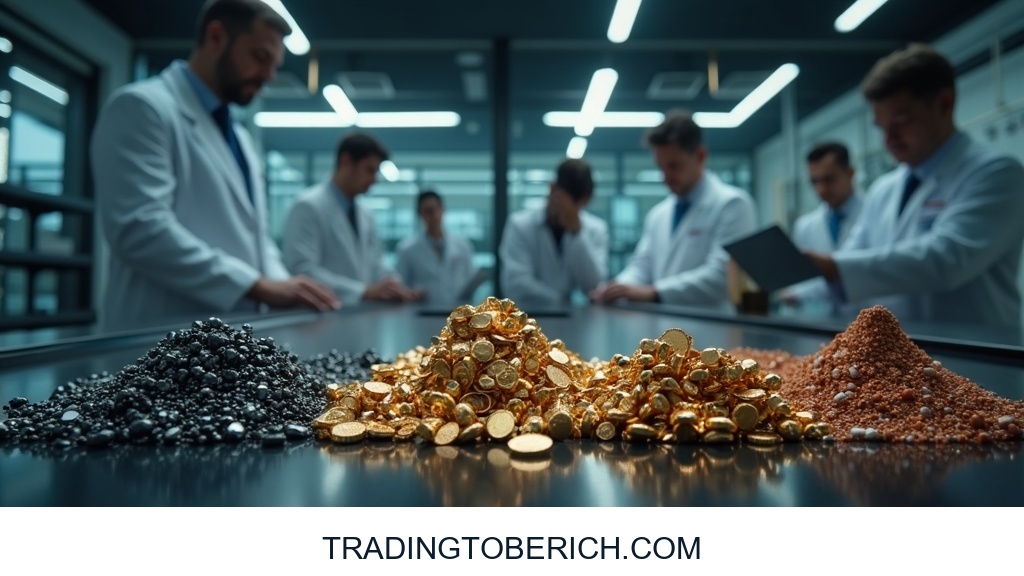
How to Invest in Lithium and EV Battery Metal Commodities Amid the Green Energy Transition
The green energy transition is accelerating at an unprecedented pace, with electric vehicles (EVs) at the forefront of this shift. However, the physical limitations of lithium extraction present a critical bottleneck. While demand from Tesla, BYD, and other automakers is growing exponentially, the supply of lithium—and other rare earth elements—faces geological, environmental, and geopolitical constraints. For investors exploring how to invest in lithium and EV battery metal commodities, understanding these dynamics is essential to navigating the long-term structural imbalance between supply and demand.
Unlike copper, which benefits from well-established trading strategies tied to global manufacturing activity (such as those outlined in how industrial demand correlates with PMI trends), lithium and battery metals operate in a far less liquid and more fragmented market. While copper’s price movements often reflect broader economic cycles, lithium’s volatility is driven by supply chain disruptions, regulatory changes, and technological advancements in battery chemistry. This makes direct exposure to lithium futures or mining equities inherently riskier—but also potentially more rewarding for those who time their entries well.
The Supply Crunch: Why Lithium Extraction Can’t Keep Up
The physical limitations of lithium extraction are stark. Most of the world’s lithium is sourced from brine deposits in South America’s “Lithium Triangle” (Argentina, Bolivia, Chile) or hard-rock mines in Australia. Brine extraction is slow—taking 12 to 18 months to evaporate lithium-rich brine in vast ponds—while hard-rock mining is energy-intensive and environmentally contentious. Even with aggressive expansion plans, new projects face permitting delays, water scarcity issues, and community opposition. Meanwhile, automakers like Tesla and BYD are scaling production at a pace that far outstrips current mining output.
◈ Brine vs. Hard-Rock: The Two Dominant Extraction Methods
Brine extraction, primarily in South America, involves pumping lithium-rich brine into evaporation ponds, where solar energy concentrates the lithium over months. This method is low-cost but slow and water-intensive, making it vulnerable to droughts and environmental regulations. Hard-rock mining, led by Australia, crushes spodumene ore to extract lithium, offering faster production but at higher capital and energy costs. Neither method can scale quickly enough to meet the surging demand from the green energy transition.
◈ Geopolitical Risks: The China Factor in Rare Earth Elements
China controls over 60% of the world’s lithium refining capacity and dominates the processing of rare earth elements like cobalt and nickel, which are critical for EV batteries. This concentration of supply chains creates significant geopolitical risk. Trade tensions, export restrictions, or even localized disruptions in China could send shockwaves through the battery metals market. Investors must weigh these risks when considering how to invest in lithium and EV battery metal commodities, as physical supply constraints may persist even if demand continues to soar.
Beyond Lithium: Diversifying with Other EV Battery Metals
While lithium grabs headlines, the green energy transition relies on a broader suite of metals. Cobalt, nickel, and graphite are equally critical to battery performance, and each faces its own supply challenges. Cobalt, for example, is primarily mined in the Democratic Republic of Congo, where artisanal mining practices raise ethical and operational concerns. Nickel, meanwhile, is essential for high-energy-density batteries but suffers from quality inconsistencies and refining bottlenecks. For investors, diversifying across these metals can mitigate the risks of overconcentration in lithium alone.
◈ Cobalt: The Ethical Dilemma of the EV Supply Chain
Cobalt is a key component in lithium-ion batteries, but its supply chain is fraught with ethical and logistical challenges. Over 70% of the world’s cobalt comes from the DRC, where child labor and unsafe mining practices have drawn international scrutiny. Automakers are actively seeking to reduce cobalt dependency through alternative battery chemistries, but for now, it remains a critical—and volatile—commodity for investors to monitor.
◈ Nickel: The High-Performance Metal with Supply Gaps
Nickel is essential for high-energy-density batteries, particularly in long-range EVs. However, the metal’s supply is constrained by limited high-purity refining capacity and geopolitical risks. Indonesia, the world’s largest nickel producer, has imposed export bans on raw nickel ore to boost domestic processing, creating short-term supply disruptions. For investors, nickel’s price volatility presents both opportunities and risks, particularly as automakers race to secure long-term contracts.
How to Invest in Lithium and EV Battery Metals: Strategies for Exposure
For investors looking to capitalize on the green energy transition, there are several ways to gain exposure to lithium and other rare earth elements. Direct investment in physical commodities is impractical for most, but futures contracts, mining equities, and ETFs offer liquid alternatives. However, these markets are highly speculative, and timing is critical. Just as traders use EIA inventory reports to gauge short-term price movements in Brent crude, lithium investors must closely monitor supply chain developments, such as mine expansions, geopolitical tensions, and battery technology breakthroughs.
◈ Lithium Futures: High Risk, High Reward
Lithium futures, traded on exchanges like the CME, offer direct exposure to price movements. However, the market is thinly traded compared to oil or gold, leading to higher volatility and wider bid-ask spreads. Investors must be prepared for sharp price swings driven by supply disruptions or shifts in automaker demand. For those with a high risk tolerance, lithium futures can be a powerful tool—but they require active management.
◈ Mining Equities: Leveraged Exposure to the Green Energy Boom
Investing in lithium and battery metal miners provides leveraged exposure to rising commodity prices. Companies like Albemarle, SQM, and Ganfeng Lithium benefit directly from higher lithium prices, but they also face operational and geopolitical risks. Diversifying across multiple miners can help mitigate company-specific risks, but investors should be prepared for volatility. Unlike trading agricultural commodities such as cocoa—where supply shortages in West Africa can create predictable price spikes—battery metals are subject to rapid technological and regulatory changes.
◈ ETFs: A Balanced Approach to Rare Earth Elements
For investors seeking diversified exposure without the risks of single-stock or futures trading, ETFs like the Global X Lithium & Battery Tech ETF (LIT) or the Amplify Lithium & Battery Technology ETF (BATT) offer a balanced approach. These funds hold baskets of lithium producers, battery manufacturers, and other rare earth elements players, reducing idiosyncratic risk. However, ETFs may underperform in a strong bull market, as they dilute the upside of individual winners.
The Long-Term Outlook: Structural Imbalance Favors Supply
The physical limitations of lithium extraction, combined with exponential demand from the EV sector, suggest a prolonged structural imbalance in the market. Unlike oil, where spare capacity and strategic reserves can buffer supply shocks, lithium and other battery metals lack such flexibility. This dynamic favors long-term price appreciation, but investors must remain vigilant. Technological advancements—such as solid-state batteries or sodium-ion alternatives—could disrupt the status quo, while geopolitical tensions may accelerate supply chain fragmentation.
For those exploring how to invest in lithium and EV battery metal commodities, the key is to balance conviction in the green energy transition with disciplined risk management. Whether through futures, equities, or ETFs, the path to profitability lies in understanding the unique supply-demand dynamics of these critical materials—and staying ahead of the curve.
Future Trends: How the Green Energy Transition Will Shape Lithium and EV Investments
The Green Energy Transition: A Lithium Supply Crunch in the Making
The green energy transition is accelerating at an unprecedented pace, with electric vehicles (EVs) at the forefront of this revolution. Tesla and BYD, the world’s largest EV manufacturers, are scaling production at a rate that far outstrips the current capacity for lithium extraction. This mismatch between supply and demand is not just a short-term bottleneck—it’s a structural challenge that will define how to invest in lithium and EV battery metal commodities for the next decade.
Lithium, often called the “white gold” of the rare earth elements powering the EV revolution, faces severe physical limitations in extraction. Unlike oil or natural gas, lithium cannot be drilled or pumped at scale overnight. New mines take 5–10 years to develop, and even then, they are subject to geopolitical risks, environmental regulations, and water scarcity issues. Meanwhile, Tesla and BYD are locked in a race to dominate the EV market, with both companies projecting exponential growth in battery demand. This dynamic creates a perfect storm for investors: a commodity with inelastic supply meeting hyper-elastic demand.
The Lithium Supply Chain: Why Physical Constraints Matter
To understand how to invest in lithium and EV battery metal commodities, you must first grasp the harsh realities of lithium extraction. The process is slow, capital-intensive, and geographically concentrated. Over 70% of the world’s lithium supply comes from just three countries: Australia, Chile, and China. This concentration introduces significant supply chain risks, as any disruption—whether from political instability, trade wars, or environmental protests—can send shockwaves through the market.
Moreover, lithium extraction is not as simple as flipping a switch. Hard-rock mining (Australia’s primary method) and brine evaporation (Chile’s approach) are both time-consuming and environmentally taxing. Brine operations, for example, require massive amounts of water in some of the driest regions on Earth, leading to conflicts with local communities and regulators. These physical constraints mean that even if lithium prices skyrocket, supply cannot respond quickly enough to meet demand. For investors, this translates to a prolonged period of structural undersupply—a dream scenario for those positioned early in the green energy transition.
◈ Geopolitical Risks in Lithium Supply
China controls nearly 60% of the world’s lithium refining capacity, giving it outsized influence over the rare earth elements market. Any escalation in U.S.-China tensions could disrupt the flow of processed lithium to Western EV manufacturers, creating a supply shock. Meanwhile, Latin America’s “lithium triangle” (Argentina, Bolivia, Chile) is becoming a hotspot for resource nationalism, with governments increasingly asserting control over mining projects. These geopolitical risks add another layer of complexity for investors looking to capitalize on the green energy transition.
◈ Environmental and Regulatory Hurdles
Lithium extraction is water-intensive, and in regions like Chile’s Atacama Desert, it’s already sparking conflicts with local communities and environmental groups. Governments are responding with stricter regulations, which can delay or even halt new projects. For example, Chile’s recent move to nationalize its lithium industry has sent shockwaves through the market, raising concerns about future supply stability. These regulatory hurdles make it even harder for supply to keep pace with the surging demand from the green energy transition.
Demand Drivers: Why Tesla and BYD Are Just the Beginning
Tesla and BYD are the vanguard of the EV revolution, but they are far from the only players driving lithium demand. Governments worldwide are mandating the phase-out of internal combustion engines, with the EU banning new gasoline and diesel cars by 2035 and the U.S. targeting 50% EV sales by 2030. These policies are creating a tidal wave of demand that will dwarf even the most aggressive production forecasts. For investors, this means that how to invest in lithium and EV battery metal commodities is not just about betting on Tesla’s success—it’s about positioning for a multi-decade shift in global energy consumption.
Beyond passenger vehicles, lithium demand is also being driven by energy storage systems (ESS) and commercial EVs. As renewable energy adoption grows, so does the need for grid-scale batteries to store intermittent wind and solar power. This creates a secondary demand stream for lithium that is often overlooked by investors focused solely on EVs. The rare earth elements market is thus entering a phase of “demand stacking,” where multiple industries compete for the same limited supply. For those looking to capitalize on the green energy transition, this presents a unique opportunity to diversify across the entire lithium value chain.
Interestingly, the volatility in lithium markets shares some parallels with other commodities, such as the dynamics between WTI and Brent crude. Just as traders exploit price differentials in oil markets, savvy investors in lithium can capitalize on regional supply imbalances or refining bottlenecks. Understanding these nuances can provide an edge in navigating the complexities of the green energy transition.
◈ The Rise of Energy Storage Systems (ESS)
Grid-scale batteries are becoming a critical component of the green energy transition, as they enable the storage of renewable energy for use during peak demand periods. This sector is growing at a compound annual rate of over 30%, and lithium-ion batteries dominate the market. For investors, this means that lithium demand is no longer tied solely to EV production—it’s also being driven by the need to stabilize power grids as they transition away from fossil fuels.
◈ Commercial EVs: The Next Frontier
While passenger EVs grab most of the headlines, commercial EVs—such as electric trucks, buses, and delivery vans—are poised to become a major driver of lithium demand. Companies like Amazon, FedEx, and UPS are electrifying their fleets, and governments are offering incentives to accelerate the transition. These vehicles require larger batteries than passenger cars, meaning they consume significantly more lithium per unit. For investors, this represents a high-growth segment that is often overlooked in discussions about how to invest in lithium and EV battery metal commodities.
Investment Strategies: How to Position for the Lithium Supercycle
Given the structural supply constraints and surging demand, lithium is poised for a multi-year bull market. However, how to invest in lithium and EV battery metal commodities requires a nuanced approach. Direct exposure to lithium producers is one option, but it comes with risks, including geopolitical instability and operational challenges. Alternatively, investors can gain exposure through lithium ETFs, battery manufacturers, or even automakers with vertical integration strategies. The key is to diversify across the value chain while staying mindful of the physical limitations of lithium extraction.
For those looking to hedge their bets, it’s worth considering how other commodities behave in periods of high demand. For instance, seasonal patterns in natural gas futures can offer insights into how supply and demand imbalances play out in real time. While lithium doesn’t have the same seasonal volatility as natural gas, the underlying principles of supply constraints and demand surges are strikingly similar. Understanding these dynamics can help investors anticipate price movements and position their portfolios accordingly.
◈ Direct Exposure: Lithium Producers and Miners
Investing directly in lithium producers offers the most leverage to rising lithium prices. Companies like Albemarle, SQM, and Ganfeng Lithium are among the largest players in the space, with operations spanning mining, refining, and battery-grade lithium production. However, this approach comes with risks, including geopolitical exposure, regulatory hurdles, and operational challenges. For example, Albemarle’s operations in Chile have faced delays due to environmental protests, highlighting the risks of direct exposure.
◈ Indirect Exposure: Battery Manufacturers and Automakers
For investors seeking less direct exposure, battery manufacturers and automakers offer an alternative way to capitalize on the green energy transition. Companies like CATL, LG Energy Solution, and Panasonic are at the forefront of battery production, while automakers like Tesla and BYD are vertically integrating to secure their lithium supply. These companies benefit from rising lithium prices but are less exposed to the operational risks of mining. However, they are not immune to broader market risks, such as competition and technological disruption.
◈ Lithium ETFs: Diversified Exposure
For those who prefer a diversified approach, lithium ETFs offer exposure to a basket of lithium producers, battery manufacturers, and automakers. Funds like the Global X Lithium & Battery Tech ETF (LIT) and the Amplify Lithium & Battery Technology ETF (BATT) provide broad exposure to the rare earth elements market, reducing the risk of individual company failures. However, ETFs can also dilute returns, as they include companies with varying levels of exposure to lithium.
The Role of Technology: Can Innovation Solve the Lithium Crisis?
While the physical limitations of lithium extraction are daunting, technological innovation could provide a partial solution. Researchers are exploring alternative battery chemistries, such as sodium-ion and solid-state batteries, which could reduce reliance on lithium. However, these technologies are still in the early stages of development and are unlikely to scale commercially for at least a decade. In the meantime, lithium remains the dominant player in the green energy transition, and its supply constraints will continue to drive prices higher.
Another area of innovation is lithium recycling. As the first generation of EVs reaches the end of its lifespan, recycling could become a significant source of lithium supply. Companies like Redwood Materials and Li-Cycle are already scaling up recycling operations, but the process is still in its infancy. For now, recycled lithium accounts for less than 1% of global supply, but this could grow to 10–20% by 2030. For investors, this presents an opportunity to gain exposure to the circular economy while hedging against future supply constraints.
It’s also worth noting that technological innovation isn’t limited to lithium. Just as traders analyze seasonal patterns in corn futures to anticipate price movements, investors in the green energy transition must stay attuned to breakthroughs in battery technology. While lithium is the dominant player today, the next decade could see a shift toward alternative materials, and those who adapt early will be best positioned to capitalize on the next wave of innovation.
◈ Alternative Battery Chemistries
Sodium-ion batteries are emerging as a potential alternative to lithium-ion, particularly for applications where energy density is less critical, such as grid storage. Companies like CATL and BYD are already commercializing sodium-ion batteries, but they are not yet a direct threat to lithium’s dominance in EVs. Solid-state batteries, which promise higher energy density and safety, are another area of innovation, but they remain years away from mass production. For now, lithium remains the king of the rare earth elements market.
◈ Lithium Recycling: The Circular Economy
As the first generation of EVs reaches the end of its lifespan, lithium recycling could become a critical source of supply. Companies like Redwood Materials and Li-Cycle are developing advanced recycling technologies to recover lithium, cobalt, and nickel from used batteries. While recycling currently accounts for less than 1% of global lithium supply, this could grow to 10–20% by 2030. For investors, this presents an opportunity to gain exposure to the circular economy while mitigating the risks of supply constraints in the green energy transition.
The Bottom Line: Why Lithium Is the Investment Opportunity of the Decade
The green energy transition is not just a trend—it’s a fundamental shift in how the world produces and consumes energy. At the heart of this transition is lithium, a commodity with inelastic supply and hyper-elastic demand. The physical limitations of lithium extraction, combined with the exponential growth of EV production, create a perfect storm for investors. Those who understand how to invest in lithium and EV battery metal commodities will be well-positioned to capitalize on one of the most significant investment opportunities of the 21st century.
However, investing in lithium is not without risks. Geopolitical tensions, regulatory hurdles, and technological disruption could all impact the market. The key is to diversify across the value chain, stay informed about technological advancements, and remain mindful of the physical constraints that define the lithium market. For those willing to navigate these complexities, lithium offers a once-in-a-generation opportunity to profit from the rare earth elements powering the future.
Conclusion
The **green energy transition** is colliding with harsh physical realities: lithium extraction simply cannot scale fast enough to meet Tesla and BYD’s exponential demand. This structural mismatch guarantees multi-year supply deficits, making **how to invest in lithium and EV battery metal commodities** one of the most asymmetric trades of the decade. Rare earth elements face the same bottleneck—geology, not capital, is the binding constraint.
For investors, the playbook is clear: secure exposure to **lithium and EV battery metal commodities** before the next leg of the **green energy transition** accelerates. Physical assets, royalties, and early-stage miners with proven reserves will outperform as the market reprices scarcity. The clock is ticking—position now or risk missing the trade entirely.
Frequently Asked Questions
How to Invest in Lithium and EV Battery Metal Commodities Amid the Green Energy Transition?
Investing in lithium and EV battery metal commodities is a strategic move in the green energy transition, as demand for these resources surges due to the exponential growth of electric vehicles (EVs) from manufacturers like Tesla and BYD. To capitalize on this trend, consider direct exposure through commodity futures, exchange-traded funds (ETFs) focused on rare earth elements, or shares in mining companies specializing in lithium extraction. However, be mindful of the physical limitations of lithium extraction, which may create supply bottlenecks despite rising demand. Diversifying across the supply chain—from mining to battery production—can help mitigate risks while aligning with the long-term shift toward sustainable energy.
What Are the Key Challenges in Lithium Extraction for the Green Energy Transition?
The green energy transition is heavily reliant on lithium, but the physical limitations of lithium extraction pose significant challenges. Current mining techniques are energy-intensive, water-dependent, and geographically concentrated, which can lead to supply chain disruptions. Additionally, the exponential demand from EV giants like Tesla and BYD is outpacing the industry’s ability to scale production efficiently. These constraints could result in price volatility for lithium and EV battery metal commodities, making it crucial for investors to assess both supply risks and long-term demand trends when evaluating opportunities in rare earth elements and battery metals.
Are Rare Earth Elements a Better Investment Than Lithium for EV Battery Demand?
While lithium remains the cornerstone of EV battery technology, rare earth elements play a critical role in the green energy transition as well, particularly in permanent magnets for electric motors and energy-efficient technologies. Investors exploring how to invest in lithium and EV battery metal commodities should consider diversifying into rare earth elements to hedge against lithium’s supply constraints. However, rare earth elements come with their own challenges, including geopolitical risks, environmental concerns, and complex refining processes. Balancing exposure to both lithium and rare earth elements can provide a more resilient portfolio as the world accelerates toward sustainable energy solutions.
📂 Associated Market Intelligence
- ◈How to trade XAU/USD during high inflation periods
- ◈Copper trading strategy based on global manufacturing PMI
- ◈How the commodity supercycle impacts global inflation and interest rates
- ◈How weather patterns affect wheat commodity futures prices
- ◈Soybean futures trading strategy using WASDE reports
- ◈Cocoa trading strategy during West African supply shortages
- ◈How to trade corn futures seasonality patterns
- ◈Cotton commodity trading strategy for swing traders
- ◈Frozen Concentrated Orange Juice (FCOJ) futures trading strategy
- ◈Ethanol production demand and its impact on corn futures
- ◈How to trade Brent crude oil using EIA inventory reports
- ◈Silver trading strategy: industrial demand vs safe haven
- ◈Natural gas futures trading strategy for winter seasonality
- ◈How to trade the WTI vs Brent crude oil price spread
- ◈Trading Palladium and Platinum: The auto industry correlation
- ◈Coffee futures trading strategy: Arabica vs Robusta markets
- ◈Sugar futures trading strategy and its correlation to crude oil
- ◈Understanding Contango and Backwardation in commodity futures
⚖️ REGULATORY DISCLOSURE & RISK WARNING
The trading strategies and financial insights shared here are for educational and analytical purposes only. Trading involves significant risk of loss and is not suitable for all investors. Past performance is not indicative of future results.