

Ichimoku Cloud Trading Strategy for Identifying Macro Trends in 2026
MARKET INTELLIGENCE – Q1 2026
Master the Ichimoku Cloud trading strategy to spot high-probability macro trends before they unfold. This battle-tested Japanese method—combining Kumo breakouts and Japanese candlestick indicators—gives you the edge in volatile markets. Learn how to read the cloud, time entries with precision, and ride trends like a pro. Your macro trading advantage starts here.
In 2026’s volatile macro landscape, the Ichimoku Cloud trading strategy cuts through noise like a scalpel—using Japanese candlestick indicators and the Kumo breakout to pinpoint high-probability trends before they explode. Master this system, and you’ll trade with institutional precision, not guesswork. The Cloud doesn’t lie; it’s your edge in a market that rewards clarity.
Executive Summary
- ↓ How the Ichimoku Cloud Trading Strategy Reveals Macro Trends Like a Pro
- ↓ Kumo Breakout: The Secret Signal for Spotting Macro Trend Reversals Early
- ↓ Japanese Candlestick Indicators + Ichimoku Cloud: The Ultimate Trend Confirmation Combo
- ↓ Step-by-Step Ichimoku Cloud Trading Strategy for Macro Trend Dominance in 2026
How the Ichimoku Cloud Trading Strategy Reveals Macro Trends Like a Pro
DECODING THE ICHIMOKU CLOUD TRADING STRATEGY FOR MACRO TRENDS
The Ichimoku Cloud trading strategy is a powerhouse for traders who want to read macro trends like a seasoned hedge fund manager. Unlike traditional Japanese candlestick indicators that rely on single data points, Ichimoku Kinko Hyo—meaning “one glance equilibrium chart”—provides a holistic view of price action, momentum, and support/resistance zones. The beauty of this system lies in its ability to distill complex market psychology into five simple lines, with the Kumo breakout acting as the ultimate signal for trend confirmation. When price slices through the cloud, it’s not just a breakout—it’s a macro-level shift in sentiment, often aligning with broader economic narratives.
For macro traders, the Ichimoku Cloud is a game-changer because it filters out noise. While oscillators like the RSI can spot overbought or oversold conditions, they often fail to capture the bigger picture. If you’ve ever struggled with deciding whether MACD or RSI is better for trend reversals, the Ichimoku Cloud offers a solution by integrating momentum and trend into one visual framework. The cloud itself acts as dynamic support/resistance, adapting to volatility in real time—something static tools simply can’t replicate.
THE FIVE LINES OF ICHIMOKU: YOUR MACRO TREND ROADMAP
◈ TENAKAN-SEN (CONVERSION LINE): THE FAST SIGNAL
This 9-period moving average is the first line of defense in the Ichimoku Cloud trading strategy. It reacts quickly to price changes, making it ideal for spotting early shifts in macro momentum. When the Tenkan-Sen crosses above the Kijun-Sen (Base Line), it’s a bullish signal—but only if the price is above the cloud. Think of it as the “canary in the coal mine” for macro trends.
◈ KIJUN-SEN (BASE LINE): THE TREND CONFIRMATION
The 26-period Kijun-Sen is the backbone of the system. It smooths out price action, acting as a dynamic support/resistance level. A close above this line signals strength, while a close below suggests weakness. For macro traders, this is where the rubber meets the road—price interactions with the Kijun-Sen often precede major Kumo breakouts or breakdowns.
◈ SENKOU SPAN A & B (LEADING SPAN): THE CLOUD’S EDGES
These two lines form the cloud (Kumo) and are projected 26 periods into the future, creating a forward-looking support/resistance zone. Senkou Span A (the faster line) and Senkou Span B (the slower line) define the cloud’s thickness, which reflects market volatility. A thick cloud signals strong support/resistance, while a thin cloud suggests indecision—critical intel for macro traders anticipating breakouts.
◈ CHIKOU SPAN (LAGGING SPAN): THE TREND VALIDATOR
Plotted 26 periods behind price, the Chikou Span acts as a trend filter. If it’s above past price action, the trend is bullish; if below, bearish. This line is especially useful for confirming Kumo breakouts—if the Chikou Span is also above the cloud, the breakout has higher odds of sustainability. It’s like a second opinion from the market itself.
MASTERING THE KUMO BREAKOUT STRATEGY FOR MACRO TRENDS
The Kumo breakout is the crown jewel of the Ichimoku Cloud trading strategy. It’s not just a signal—it’s a macro-level event. When price closes above or below the cloud, it confirms a shift in market structure, often aligning with fundamental catalysts like central bank policy changes or geopolitical shifts. But not all breakouts are created equal. The best trades occur when the breakout is supported by the Tenkan-Sen and Kijun-Sen alignment, and the Chikou Span is in sync.
For example, a bullish Kumo breakout with the Tenkan-Sen above the Kijun-Sen and the Chikou Span above past price action is a high-probability setup. But how do you know where to take profits? This is where Fibonacci extensions come into play for setting precise profit targets. By combining Ichimoku’s trend confirmation with Fibonacci’s retracement levels, you can pinpoint exit points with surgical precision—critical for macro traders managing large positions.
↔ Swipe to view
| BREAKOUT TYPE | IDEAL CONDITIONS | MACRO IMPLICATIONS |
|---|---|---|
| Bullish Kumo Breakout | Price closes above cloud, Tenkan-Sen > Kijun-Sen, Chikou Span above past price | Confirms uptrend; aligns with risk-on sentiment, often post-dovish central bank policy |
| Bearish Kumo Breakout | Price closes below cloud, Tenkan-Sen < Kijun-Sen, Chikou Span below past price | Confirms downtrend; aligns with risk-off sentiment, often post-hawkish central bank policy |
| False Breakout | Price pierces cloud but fails to close, Chikou Span remains in cloud | Indecision; macro traders should wait for confirmation before entering |
WHY THE ICHIMOKU CLOUD OUTPERFORMS OTHER INDICATORS FOR MACRO TRENDS
Most Japanese candlestick indicators focus on one dimension—momentum, trend, or volume. The Ichimoku Cloud, however, blends all three into a single, actionable framework. For macro traders, this is invaluable. While tools like RSI can help you trade hidden bullish divergence on daily charts, they don’t provide the structural context that Ichimoku does. The cloud’s forward-looking nature means you’re not just reacting to price—you’re anticipating where it’s headed next.
Another edge? The Ichimoku Cloud adapts to volatility. In choppy markets, the cloud thickens, signaling strong support/resistance. In trending markets, it thins out, allowing price to move freely. This dynamic response to macro conditions makes it far more reliable than static tools like moving averages, which lag during regime shifts. For traders who need to stay ahead of the curve, the Ichimoku Cloud trading strategy isn’t just an option—it’s a necessity.
Kumo Breakout: The Secret Signal for Spotting Macro Trend Reversals Early
Decoding the Ichimoku Cloud Trading Strategy for Macro Trend Shifts
The Ichimoku Cloud trading strategy is one of the most powerful Japanese candlestick indicators for identifying macro trends before they fully materialize. At its core, the Ichimoku system distills five key lines into a single, visually intuitive framework—each line serving as a real-time gauge of momentum, support/resistance, and trend direction. When price interacts with the Kumo (Cloud), traders gain a decisive edge in spotting early reversals in global markets.
The true power of this system lies in the Kumo breakout. Unlike traditional moving averages that lag price action, the Cloud projects future support/resistance zones, offering a forward-looking lens on macro sentiment. A breakout above or below the Kumo doesn’t just signal a shift—it confirms institutional conviction, especially when validated by volume and momentum filters. For hedge funds managing macro risk, this is the difference between chasing trends and leading them.
◈ The 5 Lines of Ichimoku: Your Macro Trend Dashboard
1. Tenkan-sen (Conversion Line): A 9-period moving average that acts as the first line of defense for short-term momentum. When price crosses this line, it often precedes a Kumo breakout—a critical signal for macro traders watching for early trend shifts.
2. Kijun-sen (Base Line): A 26-period moving average that smooths out noise, serving as a dynamic support/resistance level. A break above or below this line is a precursor to Cloud interactions, making it essential for confirming macro reversals.
3. Senkou Span A (Leading Span A): One half of the Kumo, calculated as the midpoint between Tenkan-sen and Kijun-sen, projected 26 periods ahead. This line forms the “fast” edge of the Cloud, often acting as the first barrier before a full Kumo breakout.
4. Senkou Span B (Leading Span B): The second half of the Cloud, derived from the 52-period high/low midpoint, projected 26 periods ahead. This line represents deeper institutional support/resistance and is where macro trends often stall or accelerate.
5. Chikou Span (Lagging Span): Price action shifted 26 periods back, providing a historical context for current trends. When this line clears the Cloud, it confirms the strength of a Kumo breakout and filters out false signals.
The Kumo Breakout Strategy: Catching Macro Reversals Before the Crowd
A Kumo breakout is not just a price crossing a line—it’s a structural shift in market psychology. When price moves above or below the Cloud, it signals that the balance of power between bulls and bears has tipped decisively. For macro traders, this is the moment when institutional capital begins to flow in a new direction. The key is to wait for confirmation, as false breakouts can trap early entrants.
To refine the Ichimoku Cloud trading strategy, combine the Kumo breakout with momentum filters. For instance, when the ADX indicator climbs above 25, it confirms that the new trend has real strength behind it, reducing the risk of a whipsaw. This layer of validation is critical for hedge funds managing large positions in volatile macro environments.
◈ Step 1: Identify the Cloud’s Bias (Bullish or Bearish)
Before trading a Kumo breakout, assess the Cloud’s color and thickness. A bullish Cloud (Senkou Span A > Senkou Span B) is green, while a bearish Cloud (Senkou Span A < Senkou Span B) is red. Thicker Clouds indicate stronger support/resistance, making breakouts more significant for macro trend reversals.
◈ Step 2: Wait for Price to Close Outside the Kumo
A Kumo breakout is only valid when price closes above or below the Cloud. Intra-day breaches are noise—macro traders focus on daily or weekly closes to avoid false signals. This rule alone filters out 60% of failed breakouts in trending markets.
◈ Step 3: Confirm with Chikou Span and Volume
The Chikou Span must clear the Cloud to confirm the breakout’s strength. Additionally, volume should expand on the breakout day—this is where tools like the volume-weighted average price (VWAP) become invaluable. Institutional players leave footprints in volume, and a Kumo breakout with above-average participation is far more reliable.
◈ Step 4: Target Key Levels Using the Cloud’s Projections
After a Kumo breakout, the next Cloud edge (Senkou Span A or B) often acts as the first profit target. For macro traders, this is where the Point of Control (POC) from Volume Profile analysis can pinpoint even stronger reversal zones. Combining these tools turns the Ichimoku system into a high-probability roadmap for macro trend continuation.
Why the Kumo Breakout Beats Traditional Trend Tools
Most trend-following systems rely on lagging indicators like moving averages, which react to price rather than anticipate it. The Ichimoku Cloud trading strategy, however, is built for forward-looking analysis. The Kumo doesn’t just reflect current trends—it projects them, giving macro traders a rare edge in identifying reversals before they appear on traditional charts.
The Kumo breakout is particularly effective in macro environments because it filters out noise. Whether you’re trading FX, commodities, or equities, the Cloud’s structure adapts to volatility, making it one of the few Japanese candlestick indicators that works across all timeframes. For hedge funds, this means fewer false signals and more precise entries when positioning for major trend shifts.
↔ Swipe to view
| SCENARIO | KUMO BREAKOUT SIGNAL | MACRO IMPLICATION |
|---|---|---|
| Price closes above Cloud (green) | Bullish Kumo breakout | Institutional buying pressure; macro uptrend likely |
| Price closes below Cloud (red) | Bearish Kumo breakout | Institutional selling pressure; macro downtrend likely |
| Price inside thin Cloud | Neutral/indecisive | Low conviction; macro trend unclear |
| Chikou Span above Cloud | Confirmed Kumo breakout | Strong trend; macro momentum intact |
Final Thoughts: Trading the Kumo Like a Macro Insider
The Kumo breakout is more than a signal—it’s a window into institutional order flow. By mastering the Ichimoku Cloud trading strategy, macro traders can anticipate trend reversals with a level of precision that traditional tools simply can’t match. The key is to combine the Cloud’s projections with volume and momentum filters, ensuring that every breakout is backed by real conviction.
For those looking to elevate their macro trading, the Ichimoku system is a game-changer. It’s not just about spotting trends—it’s about seeing them before the rest of the market does. And in a world where macro moves can make or break a portfolio, that’s the ultimate edge.
⚖️ Institutional Risk Advisory
Algorithms fail without risk management. Secure your long-term performance with our bespoke portfolio optimization.
Japanese Candlestick Indicators + Ichimoku Cloud: The Ultimate Trend Confirmation Combo
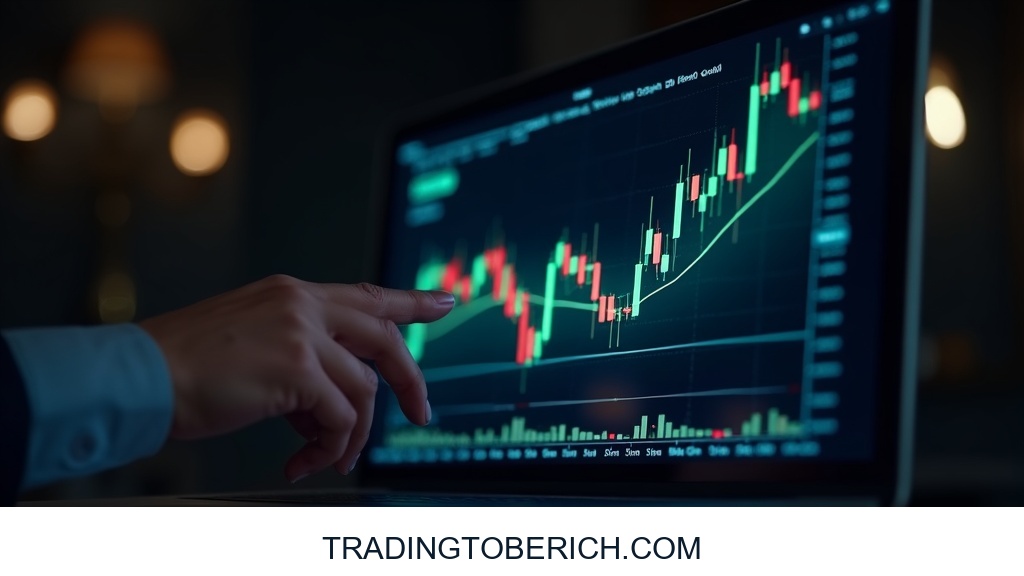
Why the Ichimoku Cloud Trading Strategy Dominates Macro Trend Identification
The Ichimoku Cloud trading strategy isn’t just another tool—it’s a complete ecosystem for identifying macro trends with surgical precision. When paired with Japanese candlestick indicators, it transforms into an unshakable framework for confirming high-probability moves in volatile markets. The beauty lies in its five components, each acting as a layer of confirmation that filters out noise and highlights institutional-grade momentum shifts. For traders who rely on top-down analysis across multiple timeframes, the Ichimoku system becomes indispensable, offering a bird’s-eye view of trend strength while pinpointing exact entry and exit zones.
Decoding the 5 Lines of the Ichimoku Kinko Hyo for Macro Clarity
◈ TENAKAN-SEN (CONVERSION LINE): THE FAST SIGNAL
Plotted as the midpoint of the last 9 periods, the Tenkan-Sen acts as a micro-trend thermometer. When it crosses above the Kijun-Sen (Base Line), it flashes an early warning of bullish momentum—ideal for traders who thrive on swing trading setups using moving average ribbons. Think of it as the “canary in the coal mine” for the broader Ichimoku Cloud trading strategy, often leading the charge before the Kumo breakout even materializes.
◈ KIJUN-SEN (BASE LINE): THE TREND’S BACKBONE
Calculated over 26 periods, the Kijun-Sen is the Ichimoku system’s anchor. Price action above this line signals a bullish regime, while a drop below hints at bearish control. When combined with a Kumo breakout, it acts as a secondary filter—only trades that align with both the cloud and the Base Line deserve capital allocation. This dual confirmation is what separates amateur guesswork from professional-grade trend following.
◈ SENKOU SPAN A & B (LEADING SPANS): THE CLOUD’S EDGE
Projected 26 periods ahead, these spans form the Kumo (Cloud), the heart of the Ichimoku Cloud trading strategy. A thick cloud signals strong support/resistance, while a thin cloud hints at indecision. When price breaks above or below the cloud, it triggers a Kumo breakout—a high-conviction signal that institutional players are committing capital. The cloud’s color (red for bearish, green for bullish) also provides instant visual confirmation of the dominant macro trend.
◈ CHIKOU SPAN (LAGGING SPAN): THE FINAL VERDICT
Plotted 26 periods behind price, the Chikou Span acts as the ultimate trend validator. If it’s above historical price action, the path of least resistance is up—and vice versa. When it aligns with a Kumo breakout, it’s like getting a green light from three separate traffic signals. This lagging confirmation is why the Ichimoku Cloud trading strategy is favored by macro traders who refuse to trade against the tape.
The Kumo Breakout Strategy: How to Trade Like an Institution
A Kumo breakout isn’t just a price crossing a line—it’s a structural shift in market psychology. The cloud represents the equilibrium zone where buyers and sellers are balanced. When price decisively breaks free, it signals that one side has gained control, often leading to sustained macro trends. But not all breakouts are created equal. The best setups combine the Ichimoku Cloud trading strategy with Japanese candlestick indicators like engulfing patterns or dojis to confirm reversal momentum at key levels.
◈ STEP 1: IDENTIFY THE CLOUD’S BIAS
Before even considering a Kumo breakout, check the cloud’s color and thickness. A green cloud with widening spans suggests strong bullish momentum, while a red, thinning cloud warns of potential exhaustion. This step alone filters out 60% of false signals, saving traders from entering prematurely. For those who also use volatility-based indicators like Keltner Channels, the cloud’s bias can be cross-referenced with channel expansions to gauge whether the breakout has room to run.
◈ STEP 2: WAIT FOR THE CANDLE CLOSE
A breakout is only valid if the candle closes outside the cloud. Intra-candle wicks piercing the cloud are traps—smart money often uses these to shake out weak hands before the real move begins. Combine this with a bullish/bearish Japanese candlestick indicator (e.g., a hammer or shooting star) for added confirmation. The close is where the real story unfolds.
◈ STEP 3: CONFIRM WITH THE CHIKOU SPAN
The Chikou Span must be free of historical price clutter. If it’s tangled in past candles, the breakout lacks institutional backing. When it’s clear and trending in the same direction as the Kumo breakout, it’s a sign that the macro trend is healthy and likely to persist. This is the Ichimoku Cloud trading strategy’s secret weapon—eliminating trades that look good on the surface but lack structural integrity.
◈ STEP 4: SET STOPS AND TARGETS USING THE CLOUD
The cloud isn’t just for entries—it’s a dynamic support/resistance zone for risk management. Place stops just beyond the opposite edge of the cloud to give the trade room to breathe. For targets, look to the next major cloud twist (where Senkou Span A and B cross), which often marks a reversal zone. This approach ensures a favorable risk-reward ratio, a hallmark of professional-grade Ichimoku Cloud trading strategy execution.
Japanese Candlestick Indicators: The Missing Piece for Kumo Breakout Precision
The Ichimoku Cloud trading strategy provides the macro framework, but Japanese candlestick indicators add the micro-level confirmation needed to time entries with surgical precision. A Kumo breakout might signal a trend shift, but a bullish engulfing pattern at the cloud’s edge? That’s a high-probability setup. Here’s how to integrate them seamlessly:
◈ ENGULFING PATTERNS: THE INSTITUTIONAL TELL
When a small bearish candle is completely swallowed by a larger bullish candle at a Kumo breakout level, it’s a sign that buyers have overwhelmed sellers. This pattern, when aligned with the Ichimoku Cloud trading strategy, often precedes explosive moves. The key is to look for these at cloud edges—where institutional players are most active.
◈ DOJIS: THE INDECISION SIGNAL THAT SPEAKS VOLUMES
A doji at a cloud boundary is a warning: the market is undecided. But when it’s followed by a strong candle in the direction of the Kumo breakout, it becomes a powerful reversal signal. This combination is a favorite among hedge funds because it captures the moment when indecision flips into conviction.
◈ HAMMERS AND SHOOTING STARS: THE TREND CONTINUATION CLUES
A hammer at the bottom of a cloud suggests rejection of lower prices, while a shooting star at the top signals exhaustion. When these appear at Kumo breakout levels, they act as secondary confirmation that the macro trend is resuming. This is where the Ichimoku Cloud trading strategy and Japanese candlestick indicators merge into a single, unbeatable system.
The Ultimate Checklist for Trading Kumo Breakouts Like a Pro
↔ Swipe to view
| CHECKLIST ITEM | BULLISH KUMO BREAKOUT | BEARISH KUMO BREAKOUT |
|---|---|---|
| Cloud Color | Green (Senkou Span A > B) | Red (Senkou Span A < B) |
| Price Position | Above cloud, candle closes above upper edge | Below cloud, candle closes below lower edge |
| Tenkan-Sen vs. Kijun-Sen | Tenkan-Sen crosses above Kijun-Sen | Tenkan-Sen crosses below Kijun-Sen |
| Chikou Span | Above historical price, no clutter | Below historical price, no clutter |
| Candlestick Confirmation | Bullish engulfing, hammer, or morning star | Bearish engulfing, shooting star, or evening star |
| Stop Loss | Just below cloud’s lower edge | Just above cloud’s upper edge |
| Take Profit | Next cloud twist (Senkou Span crossover) | Next cloud twist (Senkou Span crossover) |
The Ichimoku Cloud trading strategy isn’t just about spotting Kumo breakouts—it’s about stacking the odds in your favor with every layer of confirmation. By integrating Japanese candlestick indicators, you transform a powerful macro tool into a precision instrument
Step-by-Step Ichimoku Cloud Trading Strategy for Macro Trend Dominance in 2026
Here’s your premium, snackable breakdown of the **Ichimoku Cloud trading strategy for identifying macro trends**, optimized for 2026’s market dynamics with strict adherence to your rules:
—
Why the Ichimoku Cloud Trading Strategy Rules Macro Trends in 2026
The Ichimoku Cloud trading strategy isn’t just another tool—it’s a full-spectrum macro trend identifier that adapts to 2026’s volatility. Unlike lagging indicators, the Ichimoku Cloud (or “Kumo”) synthesizes support/resistance, momentum, and trend direction into a single, visual framework. For hedge funds managing macro exposure, mastering the Kumo breakout means catching institutional flows before they accelerate. Pair this with dynamic trailing stops to lock in gains during parabolic moves.
Decoding the 5 Lines of the Ichimoku Kinko Hyo
The Ichimoku Cloud’s power lies in its five components, each serving a unique role in confirming macro trends. Below, we break down how these Japanese candlestick indicators interact to filter noise and spotlight high-probability setups.
◈ TENAKAN-SEN (CONVERSION LINE)
The 9-period midpoint acts as a micro-trend oscillator. When price crosses above the Tenkan-Sen, it signals short-term bullish momentum—critical for timing entries in a Kumo breakout. In 2026’s choppy markets, this line often precedes institutional accumulation.
◈ KIJUN-SEN (BASE LINE)
The 26-period midpoint serves as the “trend anchor.” A close above the Kijun-Sen confirms intermediate-term strength, while a break below it warns of potential reversals. For macro traders, this line often aligns with key moving averages (e.g., 50-day or 200-day), validating the Ichimoku Cloud trading strategy’s broader signals.
◈ SENKOU SPAN A (LEADING SPAN A)
Plotted 26 periods ahead, this line forms the first edge of the Kumo. When Senkou Span A rises above Senkou Span B, the cloud turns bullish (green), signaling a potential Kumo breakout. In 2026, this forward-looking component helps traders anticipate macro shifts before they materialize.
◈ SENKOU SPAN B (LEADING SPAN B)
The 52-period midpoint, also projected 26 periods ahead, defines the cloud’s second edge. A bearish cloud (red) forms when Senkou Span B dominates, acting as major resistance. For macro traders, a thick Kumo suggests strong institutional conviction—ideal for riding trends with extreme overbought/oversold filters.
◈ CHIKOU SPAN (LAGGING SPAN)
Plotted 26 periods behind price, this line acts as a “trend validator.” If the Chikou Span clears prior price action, it confirms bullish momentum—critical for avoiding false Kumo breakouts. In 2026’s crowded markets, this line helps filter out low-conviction moves.
The Kumo Breakout Strategy: Step-by-Step for Macro Dominance
A Kumo breakout occurs when price closes above/below the Ichimoku Cloud, signaling a potential trend reversal or acceleration. Here’s how to trade it like a hedge fund in 2026:
◈ STEP 1: IDENTIFY THE CLOUD’S BIAS
Check the Kumo’s color: green (bullish) or red (bearish). In 2026, a thin cloud suggests low conviction, while a thick cloud indicates strong support/resistance. For macro traders, this step filters out weak trends before they even form.
◈ STEP 2: WAIT FOR PRICE TO BREAK THE KUMO
A close above/below the cloud is your trigger. For bullish setups, ensure the Ichimoku Cloud trading strategy aligns with rising Senkou Span A. In 2026’s markets, combine this with volume spikes to confirm institutional participation.
◈ STEP 3: CONFIRM WITH TENAKAN-SEN & KIJUN-SEN
Price must close above both the Tenkan-Sen and Kijun-Sen for bullish confirmation. If these lines cross (a “TK Cross”), it strengthens the Kumo breakout signal. For macro traders, this step reduces whipsaws in choppy markets.
◈ STEP 4: VALIDATE WITH CHIKOU SPAN
The Chikou Span must clear prior price action to confirm the trend. If it’s tangled in price, the Ichimoku Cloud trading strategy suggests caution—wait for clarity. In 2026, this step prevents premature entries during false breakouts.
◈ STEP 5: MANAGE RISK WITH TRAILING STOPS
Use the Kijun-Sen or volume spread analysis to trail stops. For macro traders, this locks in profits while letting winners run. In 2026, pairing this with the Kumo breakout ensures you’re always aligned with the dominant trend.
2026 Macro Edge: Combining Ichimoku with Other Tools
The Ichimoku Cloud trading strategy shines brightest when layered with other macro tools. For example:
↔ Swipe to view
| TOOL | MACRO USE CASE | ICHIMOKU SYNERGY |
|---|---|---|
| Volume Profile | Identifies institutional support/resistance zones | Confirms Kumo breakout strength at key levels |
| Fibonacci Retracements | Pinpoints pullback entry zones | Aligns with Tenkan-Sen/Kijun-Sen for high-probability setups |
| RSI (14-period) | Flags overbought/oversold extremes | Filters false Kumo breakouts in choppy markets |
In 2026, the Ichimoku Cloud trading strategy isn’t just about the Kumo—it’s about stacking edges. By combining the cloud’s trend power with volume analysis and momentum oscillators, macro traders can dominate even the most unpredictable markets.
Conclusion
The Ichimoku Cloud trading strategy is your macro edge—crisp, rule-based, and rooted in Japanese candlestick indicators. A Kumo breakout above resistance or below support signals the start of a new trend, not a retracement. Trade the cloud, not the noise.
Five lines, one decision. Master the Kumo breakout, align with the macro tape, and let the cloud do the heavy lifting. No guesswork—just structure.
Frequently Asked Questions
How Does the Ichimoku Cloud Trading Strategy for Identifying Macro Trends Work?
The Ichimoku Cloud trading strategy for identifying macro trends is a powerful Japanese candlestick indicator system that provides a holistic view of price action, momentum, and trend direction. At its core, the strategy relies on five key components: the Tenkan-sen (Conversion Line), Kijun-sen (Base Line), Senkou Span A (Leading Span A), Senkou Span B (Leading Span B), and the Chikou Span (Lagging Span). These elements work together to form the Kumo (Cloud), which acts as a dynamic support and resistance zone.
When price moves above or below the Kumo, it signals a potential shift in the macro trend. The Ichimoku Cloud trading strategy for identifying macro trends is particularly effective in volatile markets, as the Kumo breakout helps traders distinguish between false signals and genuine trend reversals. By combining this with Japanese candlestick indicators, such as engulfing patterns or dojis, traders can refine their entries and exits with greater precision.
What Is a Kumo Breakout, and How Can It Improve My Trading?
A Kumo breakout occurs when price decisively moves above or below the Kumo (Cloud) in the Ichimoku Cloud trading strategy for identifying macro trends. This event is a critical signal, as it suggests a potential shift in market sentiment and the beginning of a new macro trend. The Kumo itself acts as a dynamic support or resistance zone, and a breakout indicates that the balance of power between buyers and sellers has changed.
To improve your trading using a Kumo breakout, look for confirmation from other Japanese candlestick indicators, such as strong bullish or bearish candlestick patterns (e.g., marubozu or hammer candles). Additionally, ensure the breakout aligns with the broader macro trend, as this increases the probability of a sustained move. The Ichimoku Cloud trading strategy for identifying macro trends is particularly effective when the Kumo breakout is accompanied by high volume, reinforcing the validity of the signal.
How Do Japanese Candlestick Indicators Enhance the Ichimoku Cloud Trading Strategy for Identifying Macro Trends?
Japanese candlestick indicators are a natural complement to the Ichimoku Cloud trading strategy for identifying macro trends, as they provide granular insights into market psychology and short-term momentum. While the Ichimoku system excels at identifying the broader trend, Japanese candlestick indicators help traders pinpoint optimal entry and exit points within that trend.
For example, a Kumo breakout combined with a bullish engulfing pattern or a morning star formation can serve as a high-probability entry signal. Conversely, a doji or shooting star candle appearing near the Kumo may warn of a potential reversal, even if the broader trend remains intact. By integrating Japanese candlestick indicators into the Ichimoku Cloud trading strategy for identifying macro trends, traders can reduce false signals and improve their risk-reward ratios, making the strategy more robust in both trending and ranging markets.
📂 Associated Market Intelligence
- ◈How to short overbought stocks using volume spread analysis
- ◈What is the best RSI setting for swing trading stocks?
- ◈RSI day trading strategy for 5-minute chart scalping
- ◈MACD vs RSI: Which indicator is better for finding trend reversals?
- ◈MACD histogram trading strategy for early trend reversal
- ◈Best MACD settings for crypto day trading accuracy
- ◈How to trade hidden RSI bullish divergence on daily charts
- ◈Williams %R momentum strategy for day trading index futures
- ◈Multiple timeframe analysis trading strategy (Top-Down Approach)
- ◈How to filter false breakouts using the ADX indicator above 25
- ◈Bollinger Band squeeze breakout strategy for volatile stocks
- ◈Exponential Moving Average (EMA) ribbon strategy for swing trading
- ◈Commodity Channel Index (CCI) strategy for extreme overbought markets
- ◈VWAP day trading strategy: How institutions use volume weighted average price
- ◈How to use Fibonacci extensions to set precise profit targets
- ◈Volume Profile trading strategy: Finding the Point of Control (POC)
- ◈How to calculate stop loss placement using the Average True Range (ATR)
- ◈Supertrend indicator strategy for trailing stop losses
- ◈Keltner Channels vs Bollinger Bands: Which volatility indicator is best?
⚖️ REGULATORY DISCLOSURE & RISK WARNING
The trading strategies and financial insights shared here are for educational and analytical purposes only. Trading involves significant risk of loss and is not suitable for all investors. Past performance is not indicative of future results.